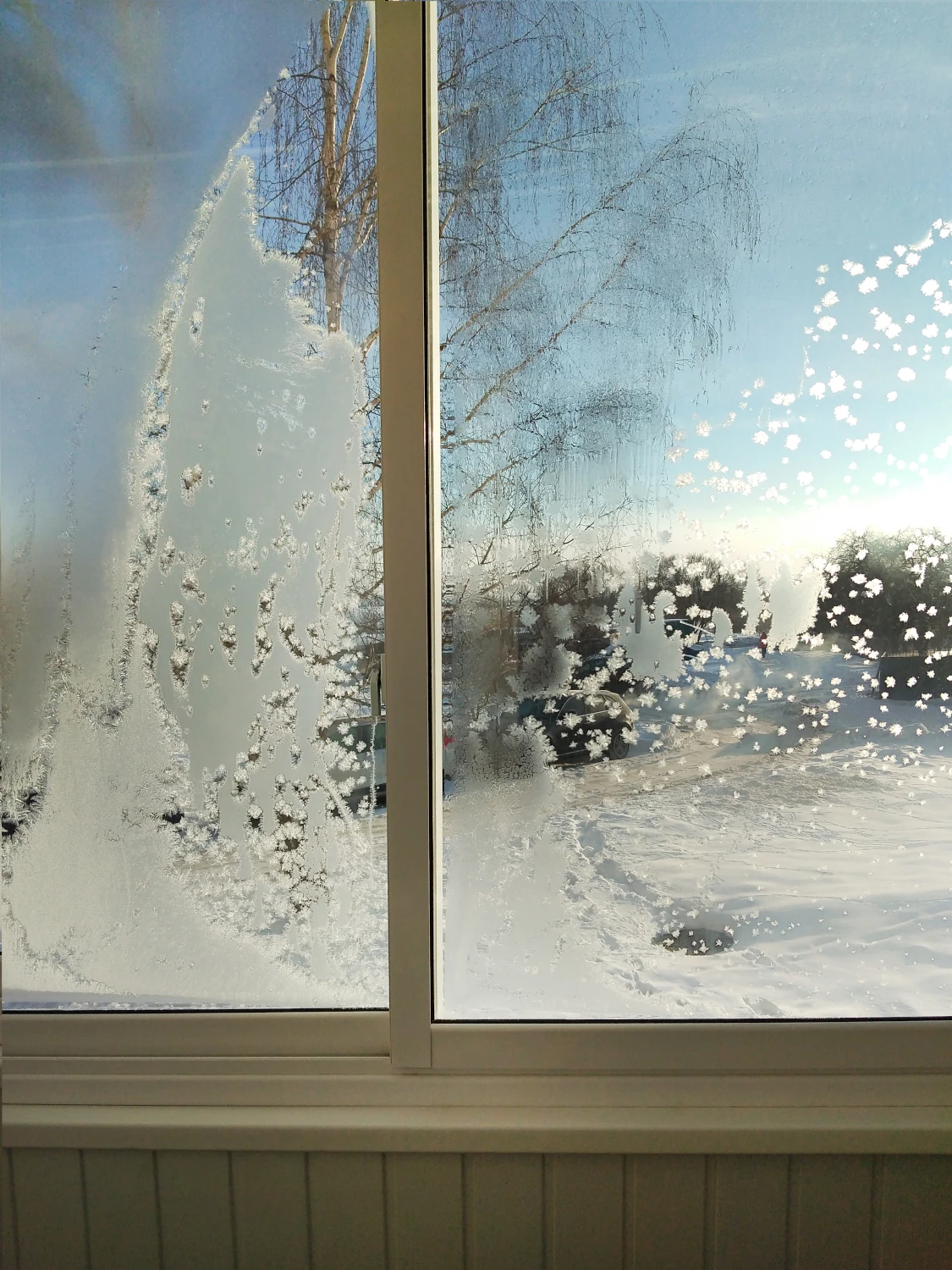

If you live in Minnesota, you’ve probably noticed that your windows seem to fog up at the most inconvenient times… usually during our brutally cold winters or those humid summer mornings when the air feels thick enough to drink. Condensation on windows is incredibly common here, but the cause (and whether you should worry) depends entirely on where that moisture is showing up.
Interior Condensation: The Minnesota Winter Classic
Interior condensation is the kind most Minnesotans see between December and March. It shows up when warm, humid indoor air hits the ice cold glass surface inside your home. Since our winter temperatures can drop to double digit sub zero levels, the inside pane of your window becomes significantly colder than the surrounding air.
Everyday activities such as showering, boiling pasta, using a humidifier, doing laundry, or simply breathing, adds moisture to the air. In a tightly sealed Minnesota home (especially with newer windows), that humidity has nowhere to go. When it lands on a freezing window? Fog, frost, and sometimes literal ice buildup.
Interior condensation = high indoor humidity meeting cold glass.
It doesn’t usually mean your window is failing, but it does mean your home may need better ventilation or humidity control. To find out, place a hygrometer near the window to measure the room’s humidity level. In a Minnesota winter, you ideally want humidity to stay around 30–40%. Even lower (25–30%) may be necessary during extreme cold snaps.
Tips on Reducing Humidity
Use your exhaust fans
Run bathroom and kitchen fans during and after showers or cooking to vent extra moisture outside.
Turn down the humidifier
Whole house and portable humidifiers can easily overshoot in winter. Try lowering the setting or turning it off temporarily.
Improve airflow
Use ceiling fans on low, open interior doors, and make sure vents aren’t blocked to keep air moving.
Add a dehumidifier
Basements in Minnesota almost always benefit from one because of cool, damp conditions.
Crack a window occasionally
Even a few minutes of fresh air helps release trapped moisture on milder winter days.
Check your dryer vent
Make sure it’s fully connected and venting outdoors. A loose vent can add a surprising amount of humidity!
Exterior Condensation: Common During Minnesota’s Humid Summer Mornings
Exterior condensation happens on the outside of your windows and is most common on warm, sticky summer mornings. Think of it like dew forming on grass. When the outdoor air is hot and humid, but the exterior glass surface is cooler, often from overnight temperature drops, moisture collects on the glass.
This type of condensation is especially noticeable on high performance windows because the insulation is doing its job: the heat and humidity stay outside, while the inside stays cool.
Exterior condensation = normal, harmless, and even a sign of efficient windows.
Condensation Between the Panes: The One to Watch Out For
If you notice fog, streaks, or moisture inside the glass unit (between the panes), that’s the kind of condensation you don’t want. Minnesota’s harsh freeze thaw cycles are tough on window seals. When seals fail, moisture works its way into the insulated glass unit (IGU), where it gets trapped.
That insulated space is supposed to stay dry and often contains argon gas for added energy efficiency. When moisture shows up between the panes, it means that seal is no longer intact. The window will lose insulating performance and will continue to fog no matter how much you clean it.
Condensation between panes = seal failure, and the window likely needs repair or replacement.
What Does This Mean for Minnesota Homeowners?
Because our climate swings from -20°F winters to 90°F humid summers, Minnesota homes experience some of the most extreme temperature differences in the country. These big swings put more stress on windows than in milder climates.
Here’s the simplified way to think about it:
- Inside condensation → humidity issue
- Outside condensation → normal weather pattern
- Between-the-panes condensation → window failure
If your home sees chronic interior condensation or you’re noticing fogging between the panes, it may be time for window replacement, especially if your windows are older or original to the home. Contact Ryan Windows & Siding today for a free no-obligation estimate.